
By Arizona estate planning attorneys Richard Keyt (480-664-7478) and his son, attorney and former CPA Richard C. Keyt (480-664-7472). Our firm has earned 433 five-star reviews on Google, Facebook and Birdeye. Updated October 6, 2026.
What it is: A complete, custom Arizona estate plan built around a revocable living trust, with 36 documents and services.
What it costs: A flat fee of $3,497 for one person or $4,497 for a married couple or two life partners. No hourly billing.
What it does: Lets you decide who inherits, names the people who act for you if you become incapacitated, protects your children and helps your family avoid probate.
How to start: Book a free office, phone or Zoom video consultation or call 480-664-7478.
Who This Estate Plan Is For
Our revocable living trust estate plan is designed for Arizona residents who want to:
- Keep their family out of a public, expensive and time-consuming Superior Court probate.
- Choose who inherits their home, savings and investments, instead of letting Arizona law decide.
- Name the people who will manage their money and make medical decisions if they become incapacitated.
- Name a guardian to raise their minor children and a trusted person to manage the children's inheritance.
- Protect an heir who has special needs, has creditor problems or should not be in charge of money.
- Pay a known, flat fee instead of an open-ended hourly bill.
If you checked even one of those boxes, a will alone is not enough. A will does not avoid probate. A properly funded revocable living trust does.
What Happens If You Die Without a Will or Trust in Arizona
Arizona has a law that decides who inherits the assets of a resident who dies without a will or a trust. That law may give your assets to the wrong people. It does not know who you love, who you trust or who should be left out.
See who Arizona would choose for you in my article Who Inherits Your Property If You Die without a Will or a Trust, then take my short online quiz, Who Inherits Your Property. If the answer surprises you, it is time to put your own plan in place.
Our Flat Fees
| Who It Is For | Flat Fee |
|---|---|
| One person | $3,497 |
| Married couple or two life partners | $4,497 |
| One person who bought our Gold LLC formation package within the past 120 days | $2,497 ($1,000 discount) |
| Married couple who bought our Gold LLC formation package within the past 120 days | $3,497 ($1,000 discount) |
| Optional add-on: Lifetime asset-protected trusts for your heirs Helps protect each heir's inheritance from the heir's creditors, ex-spouses and bankruptcy | +$1,000 |
Every fee includes your revocable living trust plus 35 other documents and services, and all planning meetings, office conferences, phone calls, emails and text messages. There is no sales pressure and no surprise hourly bill.
We publish our fees and list every document we prepare so you can compare us with other law firms before you hire anyone. Most estate planning websites will not tell you what you get or what it costs. We do not hide the ball.
How the Process Works
- Book a free consultation. Meet with Richard Keyt or Richard C. Keyt in our Scottsdale office, by phone or by Zoom. There is no obligation.
- Tell us about your family. Complete our optional online Arizona Estate Plan Questionnaire before your meeting, or we will gather the information with you during the meeting.
- We design your custom plan. We listen to your goals and concerns and prepare documents that fit your family, including documents for minor children, pets and end-of-life wishes when they apply.
- Sign your documents. You sign with the required witnesses and notary, and you leave with your binder, thumb drive, wallet cards and successor trustee manual.
- Fund your trust. We record a beneficiary deed for your home when appropriate. You use our funding guide and Asset Inventory to transfer your other assets, or you hire us to do it.
- Keep it current. We make changes free for 90 days and remind you every six months to review your plan.
What's Included: 36 Documents & Services
Every plan is custom. Some documents apply only when relevant, such as documents for minor children, pets, organ donation and particular end-of-life wishes.
To make the list easy to scan, we grouped all 36 items into six parts. Click a part to jump to it:
- Part 1: Your Trust, Will & Home (Items 1–9)
- Part 2: If You Become Incapacitated or Seriously Ill (Items 10–16)
- Part 3: If You Have Minor Children (Items 17–21)
- Part 4: Final Wishes, Vehicles & Pets (Items 22–24)
- Part 5: Tools to Organize & Fund Your Plan (Items 25–33)
- Part 6: Our Service After You Sign (Items 34–36)
Part 1: Your Trust, Will & Home (Items 1–9)
These documents are the heart of your plan. They decide who inherits, who is in charge and how your family avoids probate. Click any item to open it.
1. Revocable Living Trust
Click to open
Your trust agreement is the most important document in your estate plan. It lets you:
- Decide who inherits your assets. Arizona law does not decide for you.
- Avoid probate. Assets in your trust pass to your heirs without a public, expensive and time-consuming Superior Court probate. Our typical fee for a simple uncontested Arizona probate is $5,000, and it takes about five months.
- Keep your estate private. Probate assets and the people who receive them become public court records. Trust assets do not.
- Name a trusted person to manage your assets if you lose mental capacity.
- Name a trustee to manage money left to minor children or to heirs who should not handle money.
- Disinherit one or more people.
- Protect a special needs heir. Our trust automatically creates a special needs trust for an heir who has special needs at your death or later in life, so the heir does not lose government benefits.
- Keep things simple. While you are alive, your revocable trust is generally treated as a grantor trust, and its income is ordinarily reported on your own income tax return.
Learn more: Revocable Living Trust 101: How It Works & Why You Need One, Arizona Revocable Living Trust Frequently Asked Questions and 18 Benefits of a Revocable Living Trust.
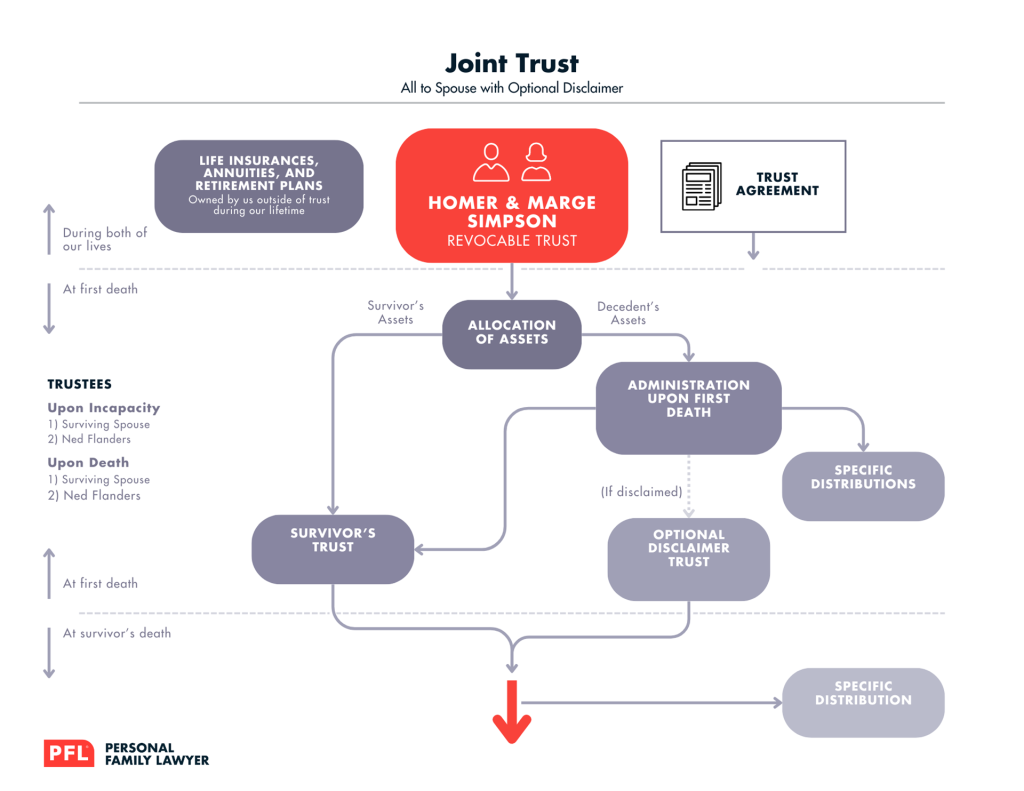
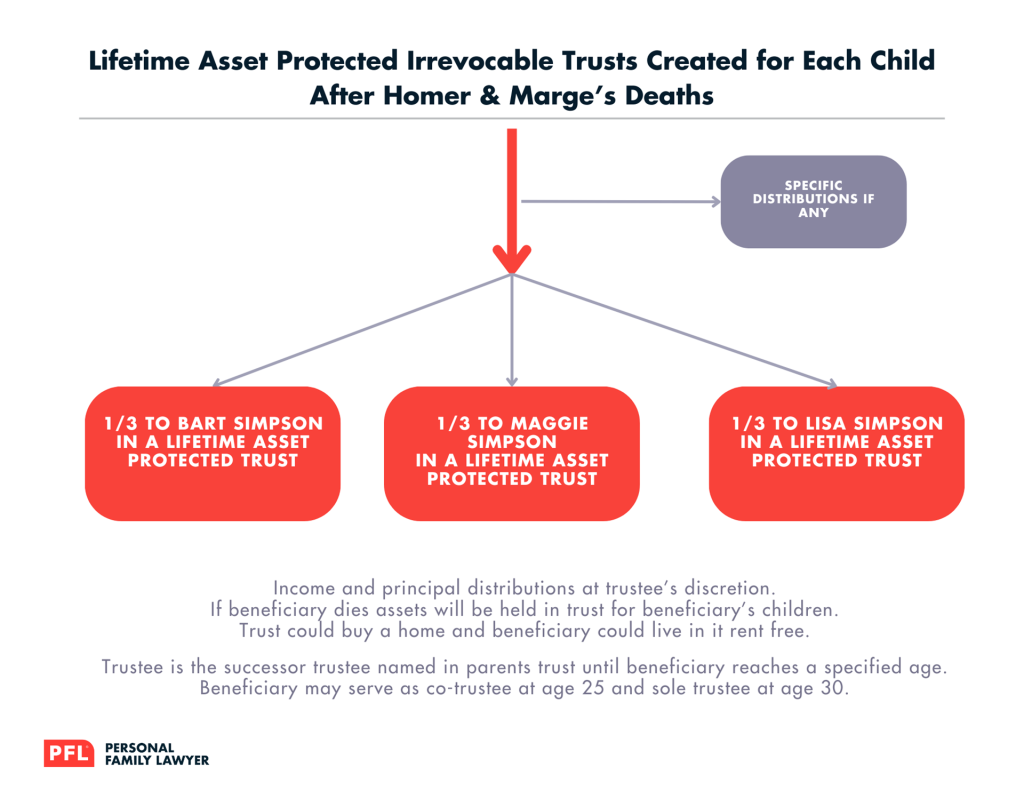
2. Diagram of Your Estate Plan
Click to open
We give you a one-page picture of your plan that shows how your assets flow to the people you love. It is the easiest way to explain your plan to your family.
3. Optional Incentive & Disincentive Provisions
Click to open
We give you optional trust language that rewards conduct you want to encourage and penalizes conduct you want to discourage. Review the optional provisions. To add any of them to your trust, copy the text and email it to Ricky Keyt at rck@keytlaw.com.
4. Certification of Trust
Click to open
When a bank, title company or other business asks for a copy of your trust, give them your Certification of Trust instead. It proves your trust exists and shows who the trustee is and what the trustee can do, without revealing who inherits or what you own.
Why it matters: Your trust agreement is confidential. The certification lets you do business without handing strangers your private family information.
Learn more: Arizona Certification of Trust Keeps Your Estate Plan Private and Arizona Certification of Trust FAQs.
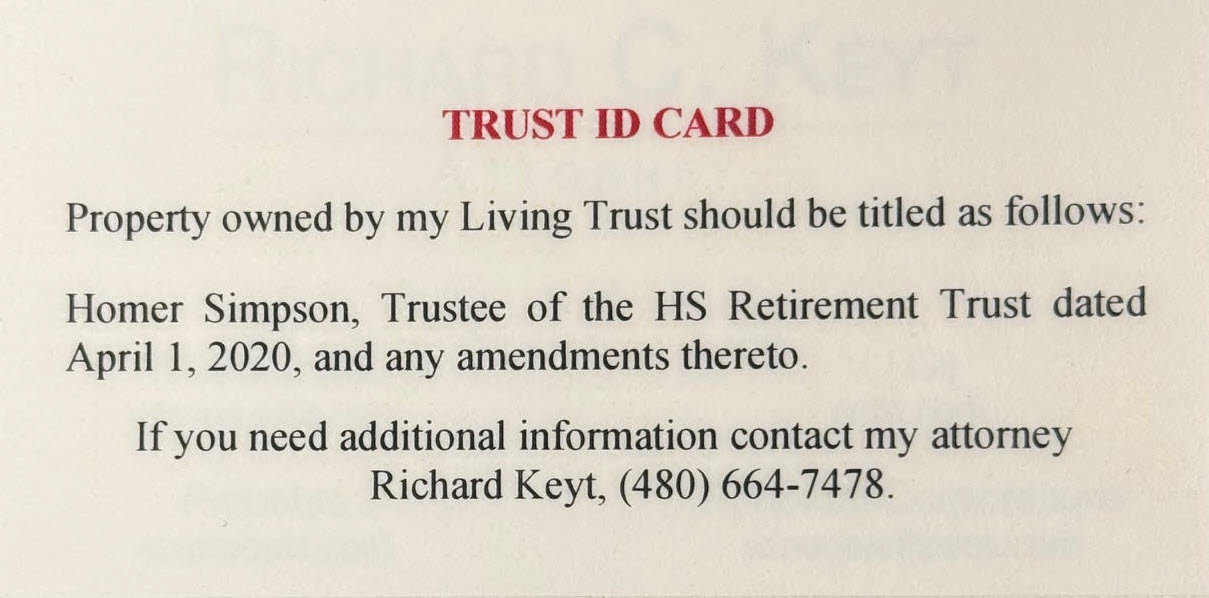
5. Trust ID Card
Click to open
This wallet card shows the exact wording to use when you title an asset in the name of your trust. Show it to your banker when you move an account into the trust, and use it when you update pay-on-death beneficiary forms.
6. Pour-Over Will
Click to open
Your Last Will & Testament says that any asset still in your name when you die goes into your trust. We call it a pour-over will because it pours leftover assets into your trust.
Why it matters: It is a safety net. If you forget to transfer an asset to your trust, the will makes sure that asset still ends up with the heirs named in your trust. Learn more: Why Every Arizona Resident Needs a Will.
7. Beneficiary Deed for Your Arizona Home
Click to open
When appropriate, we prepare and record an Arizona beneficiary deed that names the trustee of your trust as the beneficiary of your home. You keep full ownership during your lifetime. At your death (or the death of the second spouse), the home passes to your trust without probate.
Learn more: Learn about Arizona Beneficiary Deeds.
8. Assignment of Personal Property
Click to open
This document transfers your personal belongings, such as jewelry, furniture, art and equipment, to your trust so they are covered by your plan.
9. Personal Property Memorandum
Click to open
Use this memorandum to leave specific items to specific people. For example, you can describe your ring and name who gets it. Items listed on the memorandum go directly to the person you name instead of into your trust.
Part 2: If You Become Incapacitated or Seriously Ill (Items 10–16)
An estate plan protects you while you are alive, not just after you die. These documents name the people who can act for you if you cannot act for yourself. Click any item to open it.
10. Financial Power of Attorney
Click to open
Names the person or people who can manage your financial affairs if you lose the mental capacity to do it yourself, including paying bills, managing bank and investment accounts, filing taxes, buying or selling real estate, cashing checks and dealing with financial institutions.
Why it matters: Without one, your family may have to go to court to get a conservator appointed before anyone can pay your bills. Learn more: Why Not Having a Financial Power of Attorney Could Harm You.
11. Healthcare & Mental Healthcare Power of Attorney
Click to open
Your health care power of attorney names the person or people who can make medical decisions for you if you are in a coma or otherwise cannot communicate with your doctors.
Learn more: Why Every Arizona Adult Needs a Healthcare Power of Attorney.
12. HIPAA Authorization
Click to open
Federal privacy law, the HIPAA Privacy Rule, generally prohibits doctors and hospitals from sharing your medical information without your written permission. Your HIPAA authorization gives that permission to the people you choose.
Why it matters: Your healthcare agents cannot make good decisions if your doctors will not talk to them. Learn more: What Is a HIPAA Authorization & Why Every Arizona Adult Needs One.
13. Living Will
Click to open
Your living will states your wishes about life-sustaining treatment and end-of-life care if you cannot make or communicate your own decisions. You decide which treatments you want, which you do not want and when each choice applies.
Why it matters: It spares your family from guessing what you would want during the hardest moments of their lives. Learn more: Arizona Living Will: What It Is, Why You Need One, & What Happens Without It.
14. Prehospital Medical Care Directive (Do Not Resuscitate) – Optional
Click to open
Your optional prehospital medical care directive, often called a DNR, tells EMTs and emergency room staff not to resuscitate you if your heart or breathing stops. You will still receive comfort care and pain relief.
15. Organ Donation Declaration – Optional
Click to open
Your binder includes an optional form you can complete if you want to donate organs after you die.
16. Five-Year DocuBank Membership
Click to open
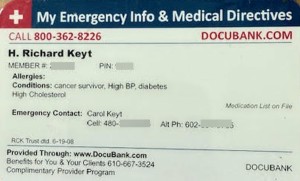
We buy you a five-year DocuBank membership and give DocuBank your healthcare power of attorney, living will and HIPAA authorization. You carry a DocuBank card in your wallet or purse. If you are hospitalized, the hospital can get these documents from DocuBank 24 hours a day, 7 days a week.
Your membership also lets you:
- List medical conditions, allergies and your emergency contact on your card.
- Store your medication list, doctors, vaccinations, surgeries and medical history online.
- Alert your emergency contacts when your card is used so they can get to your side.
- Store other private documents in an encrypted DocuBank SAFE with 2 GB of free storage, and share selected files with family members.
Part 3: If You Have Minor Children (Items 17–21)
If you have children under age 18, we prepare these five documents so a judge and a stranger do not decide your children's future. Click any item to open it.
17. Healthcare Power of Attorney for Each Minor Child
Click to open
Names one or more people who can make medical decisions for your child if you and the other parent cannot be reached. If you are on a cruise and your child needs surgery, this document lets a trusted person say yes.
18. Long-Term Guardian of Minor Children
Click to open
Tells the court who you want to raise your children if both parents die or become incapacitated.
Learn more: How to Name a Guardian of Minor Children in Arizona: A Complete Guide and Guardian of Arizona Minor Children FAQs.
19. Short-Term Guardian of Minor Children
Click to open
If your long-term guardian lives far away, you can name someone nearby to care for your children until the long-term guardian arrives.
Why it matters: It keeps your children out of the care of child protective services while the guardian travels to them.
20. People Who Can Never Be Guardian of Your Children
Click to open
If there is anyone you never want raising your children, this document tells the Superior Court so.
21. Conservator to Manage a Minor Child's Assets
Click to open
Arizona law does not let minors manage their own assets. This document tells the court who you want to manage your children's money until they turn 18 if both parents die or become incapacitated.
Part 4: Final Wishes, Vehicles & Pets (Items 22–24)
Small details that make a big difference to the people you leave behind. Click any item to open it.
22. Post Mortem Wishes
Click to open
An optional document where you tell your loved ones what you want after you die, such as cremation or burial, songs and scriptures for your service and the names of your pallbearers.
23. Beneficiary Car Title Form
Click to open
We give you the Arizona Department of Transportation form called Beneficiary Designation for Vehicle Car Title Transfer on Death. If you are the sole owner of an Arizona-titled vehicle, this form transfers the vehicle at your death to the person or people you name.
24. Pet Emergency Cards
Click to open
If you have pets, we give you two wallet cards that tell EMTs and hospital staff you have pets at home and whom to call to care for them.


Part 5: Tools to Organize & Fund Your Plan (Items 25–33)
A trust only works if your assets are in it and your family knows where to find everything. These tools make that easy. Click any item to open it.
25. Estate Plan Questionnaire
Click to open
Our optional online Arizona Estate Plan Questionnaire tells us about you, your family and your concerns so we can design a plan that fits. Complete it before your planning meeting, or we can collect the information during the meeting.
26. Online Asset Inventory
Click to open
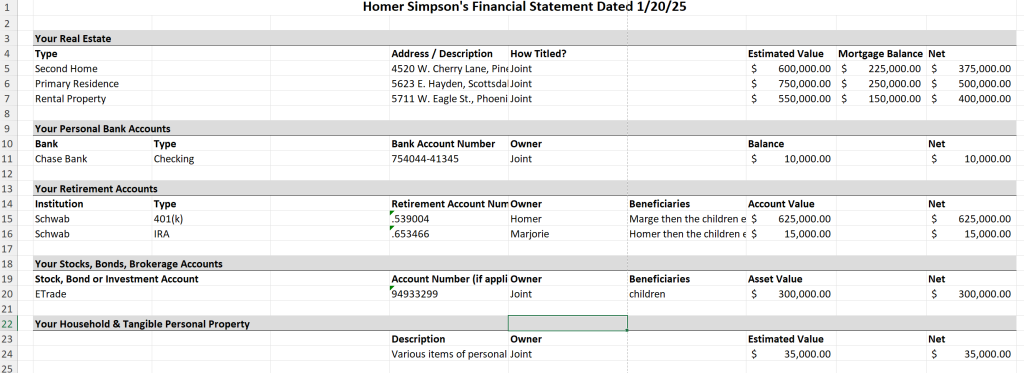
After you hire us, we email you a link to our online Asset Inventory. List your bank and investment accounts, real estate, LLCs, vehicles and other valuable assets, and the system creates a downloadable Excel spreadsheet you can update as your assets change. Your spreadsheet becomes:
- Your checklist of assets to transfer to your trust.
- Our checklist if you hire us to make the transfers.
- A map for your loved ones of what you own and where to find it.
Why it matters: If no one knows an asset exists, your family cannot claim it.
27. How to Fund Your Trust Guide
Click to open
Our 22-page guide explains how to transfer each type of asset to your trust, including cash and investment accounts, stock and stock options, bonds, personal effects, retirement plans and pensions, insurance, annuities, money owed to you, real estate, jointly owned assets and timeshares.
Why it matters: Assets you do not transfer to your trust may have to go through probate. Learn more: How to Move Real Estate, LLCs, Investment and Bank Accounts into Your Trust: The Ultimate Guide.
28. Death or Incapacity Checklist
Click to open
A list of the tasks your loved ones should complete if you die or become incapacitated.
29. Confirmation of Names
Click to open
A one-page summary of everyone you named in your plan: your successor trustees, your financial and healthcare agents, your HIPAA agents and the personal representative of your estate. Review it from time to time to decide whether anyone should change.
30. Successor Trustee Manual
Click to open
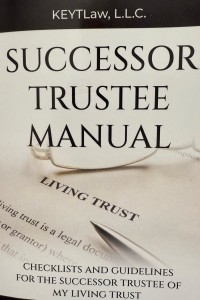
Our manual explains the legal duties of the person who will manage your trust if you die or become incapacitated. Give it to your successor trustee, who has fiduciary duties to your beneficiaries and needs to know them.
31. Family Asset Protection Book
Click to open
A copy of the estate planning book written by Richard Keyt and his son Richard C. Keyt.

32. Three-Ring Binder
Click to open
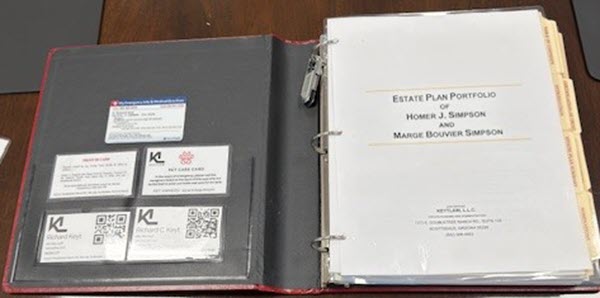
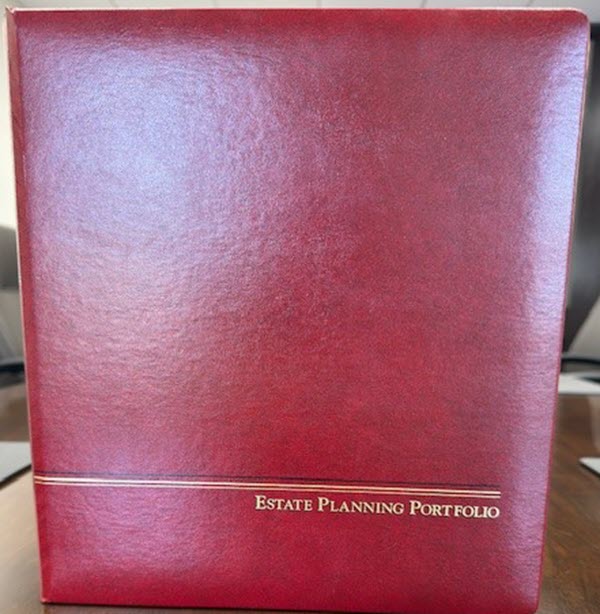
All of your signed estate plan documents, organized behind tabs in one binder.
33. Thumb Drive
Click to open
A thumb drive with PDF copies of every signed, witnessed and notarized document, so you can easily share copies with the people who need them.

Part 6: Our Service After You Sign (Items 34–36)
Your relationship with us does not end at the signing table. Click any item to open it.
34. Free Changes for 90 Days
Click to open
We make changes to your documents at no charge during the first 90 days after you sign them.
35. Post-Signing Informational Emails
Click to open
After you sign, we send you a series of emails that walk you through what to do next, including how to fund your trust.
36. Reminders to Review Your Plan
Click to open
Every six months we send you an email and a text message reminding you to review your plan and your Confirmation of Names. Life changes, and your plan should keep up.
Frequently Asked Questions
How much does an Arizona estate plan with a revocable living trust cost?
Our flat fee is $3,497 for one person and $4,497 for a married couple or two life partners. Adding a lifetime asset-protected trust for your heirs is $1,000 more. If you bought our Gold LLC formation package within the past 120 days, you save $1,000.
Will I get a bill for phone calls, emails or meetings?
No. Our flat fee includes planning meetings, office conferences, phone calls, emails and text messages. There is no hourly billing and no surprise invoice.
Does a will keep my family out of probate?
No. A will tells the probate court who gets your assets, but the assets still go through Superior Court probate. A revocable living trust avoids probate for the assets you transfer to the trust. Your plan also includes a pour-over will as a safety net for any asset you forget to put in the trust.
Do I have to transfer my assets to my trust?
Yes. A trust only controls the assets it owns. We prepare and record a beneficiary deed so your Arizona home passes to your trust at your death without probate. You transfer your bank accounts, investment accounts and other assets to the trust using our step-by-step funding guide, or you can hire us to do the transfers.
Will my trust have to file its own tax return while I am alive?
Generally, no. While you are alive and your trust is revocable, the IRS generally treats it as a grantor trust. Trust income and deductions are ordinarily reported on your personal income tax return, and a separate annual Form 1041 is generally not required. Different rules apply after the grantor dies.
Can I change my estate plan after I sign it?
Yes. Your trust is revocable, which means you can change it or revoke it while you have mental capacity. We make changes at no charge during the first 90 days after you sign, and we send you a reminder every six months to review your plan.
What if I have minor children?
We prepare five additional documents for parents of children under 18. They name who will raise your children, who will manage their money, who can make medical decisions for them when you cannot be reached, and who should never be their guardian.
What is a lifetime asset-protected trust for my heirs?
It is an optional, beneficiary-controlled irrevocable trust that holds each heir's inheritance for life. It helps protect the inheritance from the heir's creditors, ex-spouses and bankruptcy. It costs $1,000 more than our standard estate plan fee.
Do I have to come to your Scottsdale office?
No. Your free consultation can take place in our Scottsdale office, by phone or by Zoom video.
How do I get started?
Book a free office, phone or Zoom video consultation at keytlaw.com/calendar or call 480-664-7478. You can also complete our online Arizona Estate Plan Questionnaire before the meeting, or we can collect the information during the meeting.
The first step is a free, no-obligation office, phone or Zoom video consultation. We will answer your questions and design your custom Arizona estate plan.
Book a free office, phone or Zoom video consultation
Richard Keyt, the father
Direct phone: 480-664-7478
Email: rk@keytlaw.com
Richard C. Keyt, the son, attorney and former CPA
Direct phone: 480-664-7472
Email: rck@keytlaw.com
Ready to get started now? Complete our Arizona Estate Plan Questionnaire.
For more information, see our Arizona Wills, Trusts & Estate Planning Articles.