
How to Change, Replace, or Resign
as an Arizona Statutory Agent
By Arizona LLC attorneys Richard Keyt (480-664-7478 & rk@keytlaw.com) and his son Richard C. Keyt (480-664-7472 & rck@keytlaw.com). We have formed over 10,000 LLCs and have 432 five-star reviews on Google, Facebook & Birdeye. Book a free office, phone or Zoom consultation.
About this FAQ
This article answers the most important questions Arizona LLC owners have about changing and replacing a statutory agent. It explains the four-step process an Arizona LLC must follow to change its statutory agent under Arizona Revised Statutes Section 29-3116, including the written consent requirement that makes the appointment legally effective. It also explains the separate right a statutory agent has to resign without the LLC’s permission under ARS Section 29-3117, the four elements a Statement of Resignation must contain, the written notice the resigning agent must send to the LLC, and the 31-day window before the resignation takes effect. Finally, the article covers the serious consequences an Arizona LLC faces if it fails to appoint a replacement statutory agent within 60 days after a resignation, including the administrative dissolution process under ARS Section 29-3708, what administrative dissolution means for the LLC’s ability to operate, and how a dissolved LLC can apply for reinstatement under ARS Section 29-3709.
Read our 40+ LLC Frequently Asked Questions Articles.
How to Change the Statutory Agent of an Arizona LLC
By Richard Keyt, Arizona LLC Attorney — KEYTLaw, LLC
Every Arizona LLC must have a statutory agent at all times. This article explains how an LLC changes its statutory agent, how the existing statutory agent can resign without the LLC's permission, what written notice the resigning agent must give, and what happens to the LLC if it fails to name a replacement agent within the time required by Arizona law.
What Is a Statutory Agent and Why Does It Matter?
The statutory agent is the person or company designated under Arizona law to receive lawsuits, court summonses, and other official legal documents on behalf of an LLC. Every Arizona LLC must maintain a statutory agent who has a physical Arizona street address — not a post office box — at all times. Losing your statutory agent and failing to replace one quickly can have devastating consequences, including a default judgment entered against the LLC in a lawsuit it never knew was filed, and ultimately the administrative dissolution of the company by the Arizona Corporation Commission ("ACC").
The governing statutes for everything covered in this article are Arizona Revised Statutes ("ARS") Sections 29-3115, 29-3116, 29-3117, and 29-3708.
Frequently Asked Questions
Can an Arizona LLC change its statutory agent at any time?
Yes. ARS Section 29-3116 expressly allows an Arizona LLC to change its statutory agent at any time simply by filing a Statement of Change with the ACC. The LLC does not need approval from its members or managers to file the form. The change can be made whenever the LLC chooses — there is no waiting period, no minimum term the existing agent must serve, and no requirement that the LLC have a specific reason for making the change.
What are the steps to change the statutory agent of an Arizona LLC?
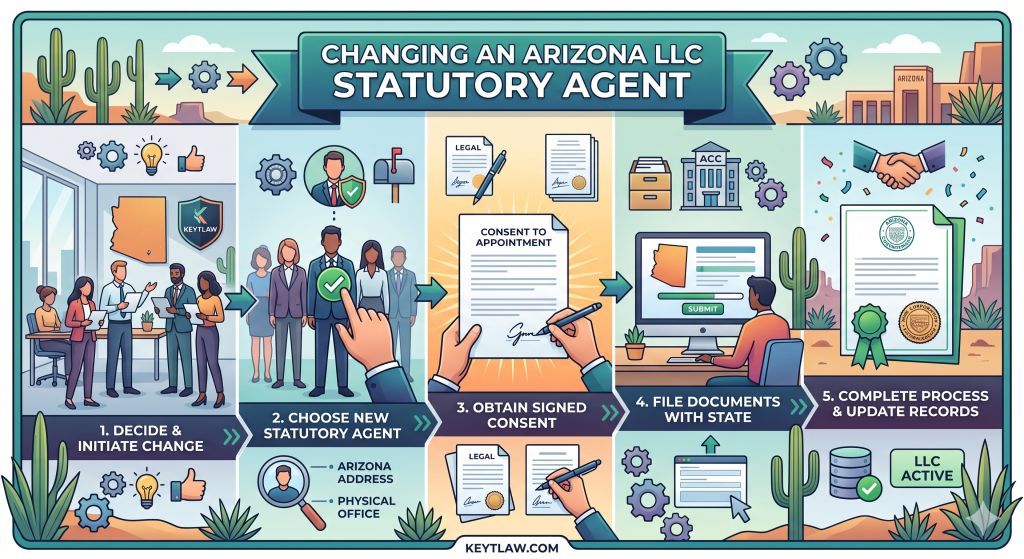
The process has four steps:
- Identify the new statutory agent. The new agent must qualify under ARS Section 29-3115. The eligible categories are: an adult individual who is a resident of Arizona; a domestic Arizona corporation or LLC; or a foreign corporation or LLC that is authorized to transact business in Arizona. The agent must have a physical Arizona street address. The LLC cannot name itself as its own statutory agent.
- Obtain the new agent's written consent. The new statutory agent must consent in writing to the appointment before the change becomes effective. The agent signs the ACC's Statutory Agent Acceptance form, or alternatively signs the Statement of Change itself.
- File the ACC Statement of Change form. The LLC prepares and files the ACC's form titled "LLC Statement of Change of Known Place of Business Address or Statutory Agent" with the Arizona Corporation Commission and pays the applicable filing fee.
- Confirm the filing. The change is not effective until the ACC accepts the filing and the new agent's signed acceptance has been delivered to the ACC.
Unless the successor statutory agent signed the statement of change, the appointment of a successor statutory agent is not effective until the successor statutory agent, the limited liability company or the registered foreign limited liability company delivers a record to the Commission signed by the successor statutory agent accepting the change or the appointment.
Does the new statutory agent need to consent in writing?
Yes, and this is a firm legal requirement, not a formality. Under ARS Section 29-3116(C), if the new statutory agent did not personally sign the Statement of Change that was filed with the ACC, the appointment is not effective until a record signed by the new agent accepting the appointment is delivered to the ACC. You cannot appoint someone as statutory agent without their knowledge and written agreement. Attempting to do so simply does not work — the change has no legal effect.
Can the existing statutory agent resign without the consent of the LLC?
Yes, absolutely. Under ARS Section 29-3117, the statutory agent has the unilateral right to resign at any time. The agent does not need the LLC's permission, the LLC's consent, or any approval from the members or managers. The agent files a Statement of Resignation directly with the ACC. Importantly, ARS Section 29-3117(E) states that a statutory agent may resign whether or not the LLC is in good standing. The LLC has no power to block the resignation.
A statutory agent may resign with respect to a limited liability company or registered foreign limited liability company whether or not the company or foreign company is in good standing.
What must the statutory agent's Statement of Resignation contain?
Under ARS Section 29-3117(A), the Statement of Resignation is filed with the ACC using the ACC's official Statutory Agent Resignation LLC form. The statement must contain all four of the following items:
- The name of the LLC (or foreign LLC).
- The name of the resigning statutory agent.
- A statement that the agent resigns from serving as statutory agent for the company.
- The address of the LLC to which the agent will send the required written notice of the resignation date.
What written notice must the resigning statutory agent give the LLC?
After filing the Statement of Resignation with the ACC, the statutory agent must promptly send the LLC a written notice stating the date on which the Statement of Resignation was filed with the ACC. This notice is required by ARS Section 29-3117(C). The agent sends this notice to the most recent address for the LLC that the LLC provided to the agent. This notice is critical because it starts the clock running for the LLC to find a replacement agent before the resignation takes effect and before the 60-day window that could lead to administrative dissolution begins.
A statutory agent promptly shall furnish to the limited liability company or registered foreign limited liability company notice in a record of the date on which a statement of resignation was filed.
When does the statutory agent's resignation take effect?
Under ARS Section 29-3117(B), the resignation takes effect on whichever of these two events happens first:
- The thirty-first day after the day the ACC files the Statement of Resignation; or
- The date the LLC designates a new statutory agent.
The 31-day window is intentional. The Arizona Legislature built in this grace period to give the LLC time to find and appoint a replacement agent before the resignation actually takes legal effect. If the LLC acts quickly and names a new statutory agent before the 31 days expire, the resignation becomes effective on that earlier date and the transition is seamless. The practical takeaway is this: if your statutory agent resigns, appoint a replacement immediately — do not wait.
After the resignation takes effect, is the former statutory agent still responsible for receiving legal documents?
No. Under ARS Section 29-3117(D), once the resignation takes effect, the former statutory agent has no further responsibility under Arizona's LLC statutes for any process, notice, or demand that is tendered to it as agent for the LLC. Any lawsuit documents delivered to the former agent after the effective date of resignation are not legally served on the LLC through that channel.
There is one important qualification: the resignation under the statute does not wipe out any separate contractual rights or obligations that existed between the agent and the LLC. If the parties had a written statutory agent services agreement, the contractual provisions of that agreement survive the resignation and may be enforced independently of the statutory relationship.
What happens if the LLC fails to appoint a new statutory agent after the existing agent resigns?
This is where the situation becomes dangerous for the LLC. ARS Section 29-3708 gives the ACC the power to administratively dissolve an LLC that fails to comply with the statutory agent requirements. Specifically, the ACC may begin dissolution proceedings if the LLC fails to do either of the following:
- Maintain a statutory agent for 60 consecutive days. Under ARS Section 29-3708(A)(2), failing to have a statutory agent in Arizona for at least 60 consecutive days is a ground for administrative dissolution.
- Notify the ACC within 60 days after the agent resigned. Under ARS Section 29-3708(A)(4), the LLC must notify the ACC within 60 days after its statutory agent has resigned. This notification is made by filing a new Statement of Change designating a replacement statutory agent.
When the statutory agent resigns, two separate 60-day clocks effectively begin running. The LLC must (1) appoint a replacement statutory agent and (2) file the notification with the ACC — both within 60 days. Failing to meet either deadline can trigger administrative dissolution proceedings.
What is the administrative dissolution process?
Under ARS Section 29-3708(B), if the ACC determines that grounds for dissolution exist, it sends the LLC a written notice of its determination. The ACC delivers this notice to the address of the LLC's statutory agent. If the LLC no longer has a statutory agent or the statutory agent's address is invalid, the ACC sends the notice to the LLC's principal address.
Under ARS Section 29-3708(C), after receiving that notice, the LLC has 60 days to cure the problem or demonstrate to the ACC's satisfaction that the grounds for dissolution do not exist. If the LLC does not cure the problem within 60 days of the ACC's notice, the ACC issues a Statement of Administrative Dissolution. The dissolution is effective on the date stated in that statement.
What does administrative dissolution mean for the LLC?
Under ARS Section 29-3708(D), an administratively dissolved LLC continues to exist as a legal entity, but it may not carry on any activities except those necessary to wind up its affairs and liquidate its assets. The LLC cannot operate its business, enter new contracts, or conduct normal business activities. In practical terms, the company is legally shut down while still in existence — a kind of corporate purgatory.
While the LLC is without a statutory agent, it is at serious risk from lawsuits. If someone files a lawsuit against the LLC during the period it has no statutory agent, service of process may be accomplished through alternative methods. A court could enter a default judgment against the LLC — for any amount — because the LLC had no way of learning about the lawsuit.
Can an administratively dissolved LLC be reinstated?
Yes, but there are strict time limits and the LLC can lose its company name. Under ARS Section 29-3709, an administratively dissolved LLC may apply to the ACC for reinstatement, but only within six years after the effective date of dissolution. If the LLC waits more than six months after dissolution without applying for reinstatement, the ACC may release the LLC's name for use by other businesses — meaning the LLC could permanently lose the right to its own name.
To reinstate, the LLC must: (1) cure the reason for dissolution, which includes appointing a new statutory agent and filing the required forms; (2) pay a $100 reinstatement fee; and (3) pay all outstanding filing fees and penalties that were due at the time of dissolution.
Upon reinstatement, the LLC resumes its activities as if the administrative dissolution had never occurred, but the rights of third parties that arose during the dissolution period are protected and are not affected by the reinstatement.
Can KEYTLaw be the statutory agent for our Arizona LLC?
Yes. KEYTLaw, LLC provides statutory agent services for Arizona LLCs and corporations for $99 per year. This is a good option for LLC owners who do not want their home address listed on the public records of the ACC, who do not want process servers appearing at their home or business, or who live outside Arizona and need an Arizona-based statutory agent. To hire KEYTLaw as your statutory agent, complete and submit our Statutory Agent Service Questionnaire.
Questions About Your Arizona LLC's Statutory Agent?
Arizona LLC attorneys Richard Keyt and Richard C. Keyt have formed more than 10,000 Arizona LLCs. If you have questions about changing your statutory agent, dealing with a resignation, or avoiding administrative dissolution, we are here to help.
Call Richard Keyt directly at 480-664-7478 or schedule a free phone, office, or Zoom meeting.
Ready to form a new Arizona LLC? Visit azllc.com to see our three LLC formation packages and get started today.
We want to form your Arizona LLC or PLLC
- To get free answers to your LLC questions call Arizona LLC attorneys Richard Keyt (480-664-7478 & rk@keytlaw.com) or his son Richard C. Keyt (480-664-7472 & rck@keytlaw.com).
- 60+ articles about Forming & Operating Arizona LLCs
- Book a free office, phone or Zoom video meeting to get answers to your LLC questions
- See the contents & prices of our 3 LLC formation packages
- Submit our LLC formation questionnaire to hire us to form your AZ LLC today
See the Contents of Our Estate Plan
To protect your most valuable assets—your loved ones— read our article that describes the 36 documents and services you will get if you hire us to prepare your comprehensive estate plan with a revocable living trust or watch our video about the documents and services.
Questions? Book a free meeting or call or email one of our Arizona estate planning attorneys. We don't charge to talk to people.
Call, email or text Richard Keyt, father
Direct phone: 480-664-7478
Email: rk@keytlaw.com
Call, email or text Richard C. Keyt, son
Direct phone: 480-664-7472
Email: rck@keytlaw.com