
How to Insure Rental Property
Transferred to an LLC
By Arizona LLC attorneys Richard Keyt (480-664-7478 & rk@keytlaw.com) and his son Richard C. Keyt (480-664-7472 & rck@keytlaw.com). We have formed over 10,000 LLCs and have 432 five-star reviews on Google, Facebook & Birdeye. Book a free office, phone or Zoom consultation.
FAQ Summary
When you transfer a rental property deed to an Arizona LLC, your existing homeowner’s insurance likely stops covering the property, because the LLC—not you—becomes the owner of record and most personal policies insure only the named individual. To keep both legal and financial protection in place, you must replace the homeowner’s policy with a landlord (dwelling fire) policy issued in the LLC’s name, add yourself personally as an additional insured, secure liability coverage under the LLC, and consider a commercial umbrella policy. Arizona LLC attorney Richard Keyt explains the 5 insurance steps every rental property owner must take when deeding property to an LLC—and the coverage gap that can leave you uninsured and personally exposed.
Read our 40+ LLC Frequently Asked Questions Articles.
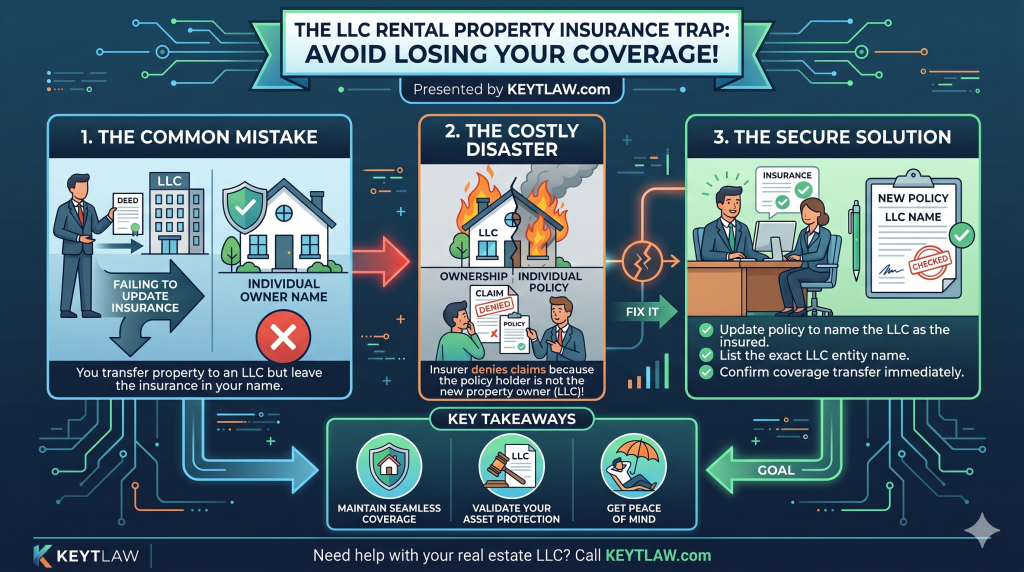
Forming an Arizona LLC to own your rental property is one of the smartest asset protection moves you can make. But here is the critical trap most property owners walk right into: they transfer the deed to the LLC and never update their insurance. The result is an LLC that provides legal protection on paper—but zero financial protection in reality. This article tells you exactly what you must do about your insurance when you transfer rental property to an LLC.
Why Your Existing Insurance Policy Likely Stops Covering the Property
When you personally own a rental property, your insurance policy names you as the insured. The policy covers the property because you own it. The moment you transfer title to an LLC by recording a new deed, the LLC—not you—is the owner of record.
Most personal homeowner’s and landlord policies cover only the named insured’s property. A transfer of title to an LLC is a material change in ownership that you are contractually required to report to your insurer. If you don’t report it and a claim arises, your insurer has strong grounds to deny the claim entirely—because the named insured on the policy no longer owns the property.
Do not assume your existing policy will “just roll over” to cover the LLC. It almost certainly will not.
The Gap That Defeats Your Asset Protection
If you transfer property to an LLC but fail to update the insurance, a claim arises, and the insurer denies coverage, the injured party can sue the LLC (which has no insurance) and sue you personally. You are now uninsured and personally exposed—the exact opposite of what forming an LLC is supposed to accomplish. The LLC gives you legal protection. Insurance gives you financial protection. You need both, properly aligned.
The 5 Insurance Steps You Must Take
Step 1. Contact Your Insurance Agent Before or At the Time of the Deed Transfer
Call your insurance agent before you sign and record the deed transferring the property to the LLC—not after. You want your new coverage bound and effective on the exact date the deed is recorded. Any gap between the deed transfer and the new policy is a window where you and the LLC are uninsured. Coordinate the timing so coverage is seamless.
Step 2. Replace the Homeowner’s Policy with a Landlord or Rental Dwelling Policy
A standard homeowner’s policy is the wrong product for rental property regardless of who owns it. You need a landlord policy (also called a dwelling fire policy or rental property policy). The new policy should be issued in the LLC’s name as the named insured. Key coverages to include:
- Dwelling and structure coverage
- Loss of rental income coverage
- Liability coverage (see Step 3)
- Personal property of the landlord (if applicable)
Step 3. Get Liability Coverage Under the LLC’s Name
The LLC must be the named insured on the liability policy. This is the coverage that matters most from an asset protection standpoint. If a tenant, guest, or visitor is injured on the property and sues, you want the liability policy to cover the LLC as the defendant. If the policy still names you individually after you have transferred title, the insurer may deny a claim filed against the LLC.
Step 4. Add Yourself Personally as an Additional Insured
Even though the LLC owns the property, ask your insurer to add you personally as an additional insured on the LLC’s policy. This is standard and most insurers will do it. Why does this matter? Plaintiffs injured on rental property almost always name both the LLC and its owner in the lawsuit. Being an additional insured ensures you have coverage if you are personally named as a defendant.
Step 5. Consider a Commercial Umbrella Policy
A commercial umbrella policy sits on top of the LLC’s base landlord policy and extends coverage above the base policy limits. If a judgment exceeds your base policy limits, the umbrella picks up the excess. For rental property owners with significant personal assets, an umbrella policy is one of the most cost-effective layers of protection you can add.
The Right Way to Think About This
An LLC and property insurance serve two different but complementary purposes:
- The LLC provides legal protection by separating your personal assets from the liabilities of the rental property. If someone sues the LLC, your personal assets are generally shielded.
- Insurance provides financial protection by paying claims, defense costs, and judgments so neither you nor the LLC has to pay out of pocket.
You need both layers working together. An LLC with no insurance, or insurance in the wrong name, leaves you exposed financially. Insurance without an LLC leaves your personal assets exposed legally. The goal is to have both in place, properly aligned, from the moment the LLC takes title to the property.
Frequently Asked Questions
What happens to my homeowner’s insurance when I transfer rental property to an LLC?
Your existing homeowner’s policy likely becomes void or voidable the moment you deed the property to the LLC. Most personal policies cover only individually-owned property. Transferring title to an LLC is a material change you are required to report to your insurer. If you file a claim after the transfer without having updated your coverage, your insurer may deny the claim entirely.
What type of insurance does an LLC that owns a rental property need?
The LLC needs a landlord policy (also called a dwelling fire policy or rental property policy) issued in the LLC’s name as the named insured. The policy should include dwelling/structure coverage, loss of rental income coverage, and liability coverage. You should also consider a commercial umbrella policy on top of the base policy for additional protection.
Should I be named on the LLC’s rental property insurance policy?
Yes. Even though the LLC owns the property, you should ask your insurer to add you personally as an additional insured on the LLC’s policy. Plaintiffs injured on rental property routinely name both the LLC and its owner in a lawsuit. Being listed as an additional insured ensures you have coverage if you are personally named in a claim.
When should I contact my insurance agent when transferring rental property to an LLC?
Contact your insurance agent before or simultaneously with signing and recording the deed—not after. You want the new landlord policy bound in the LLC’s name effective the same date the deed is recorded. Any gap in coverage between the deed transfer and the new policy creates a window where you and the LLC are uninsured.
Does transferring rental property to an LLC trigger the mortgage due-on-sale clause?
Technically yes. Most residential mortgage notes contain a due-on-sale clause that is triggered when ownership is transferred. However, most residential lenders do not accelerate the loan when property is transferred to a family LLC. You should review your loan documents, consider notifying the lender, and if possible obtain the lender’s written consent before recording the deed. Your attorney can advise you on this issue. For more on this topic and why your lender probably won’t call your loan, see my FAQ: Does Transferring Land to an LLC Trigger a Due on Sale Clause?
What is the danger of having an LLC own rental property with no insurance or the wrong insurance?
If you transfer property to an LLC but fail to update the insurance, a claim arises, and the insurer denies coverage, the injured party can sue the LLC (which has no insurance) and sue you personally. The result is that you are uninsured and personally exposed to liability—the opposite of what asset protection planning is supposed to achieve.
Arizona LLC attorneys Richard Keyt and his son, attorney and former CPA Richard C. Keyt, have formed 10,000+ Arizona LLCs and give every client lifetime free legal support for as long as their LLC exists.
See the fees and contents of our 3 LLC Formation Packages. To hire us to form an LLC submit our online questionnaire at azllc.com/llcq, or call Richard Keyt at 480-664-7478 or email rk@keytlaw.com.
We want to form your Arizona LLC or PLLC
- To get free answers to your LLC questions call Arizona LLC attorneys Richard Keyt (480-664-7478 & rk@keytlaw.com) or his son Richard C. Keyt (480-664-7472 & rck@keytlaw.com).
- 60+ articles about Forming & Operating Arizona LLCs
- Book a free office, phone or Zoom video meeting to get answers to your LLC questions
- See the contents & prices of our 3 LLC formation packages
- Submit our LLC formation questionnaire to hire us to form your AZ LLC today
See the Contents of Our Estate Plan
To protect your most valuable assets—your loved ones— read our article that describes the 36 documents and services you will get if you hire us to prepare your comprehensive estate plan with a revocable living trust or watch our video about the documents and services.
Questions? Book a free meeting or call or email one of our Arizona estate planning attorneys. We don't charge to talk to people.
Call, email or text Richard Keyt, father
Direct phone: 480-664-7478
Email: rk@keytlaw.com
Call, email or text Richard C. Keyt, son
Direct phone: 480-664-7472
Email: rck@keytlaw.com